Valved connectors
Needleless connectors with a split-septum valve. They keep the system closed between uses and differ in what happens to the fluid on disconnection.
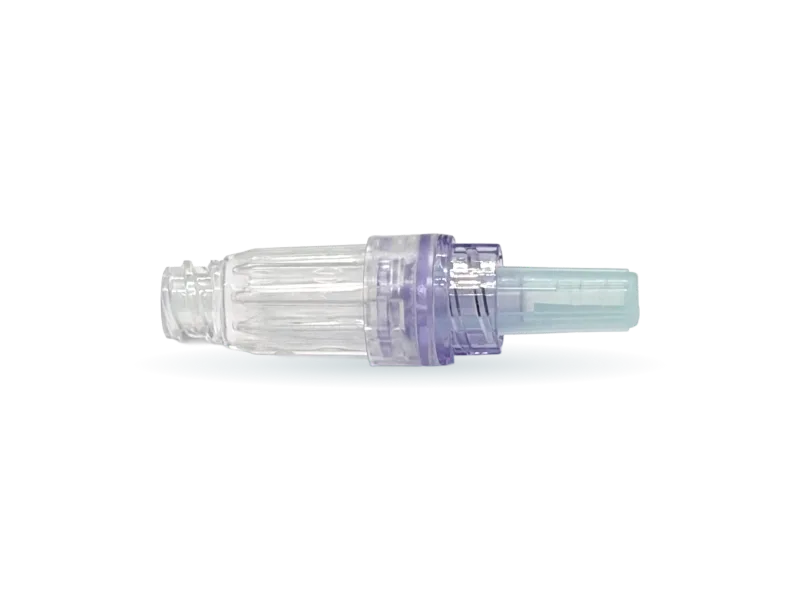
Positive displacement
Keeps the access closed and, on disconnection, pushes a small amount of fluid into the catheter.
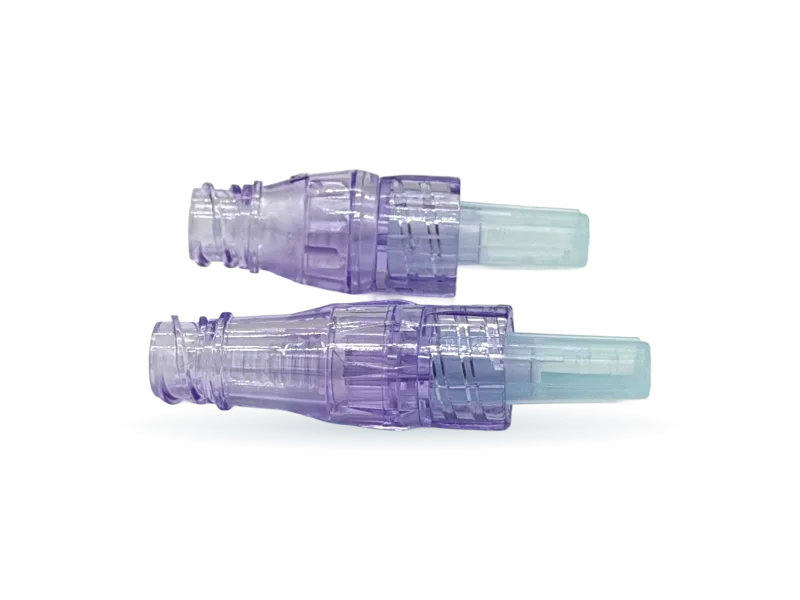
Neutral displacement
Keeps the access closed with no significant fluid movement in the catheter on disconnection. In two versions.
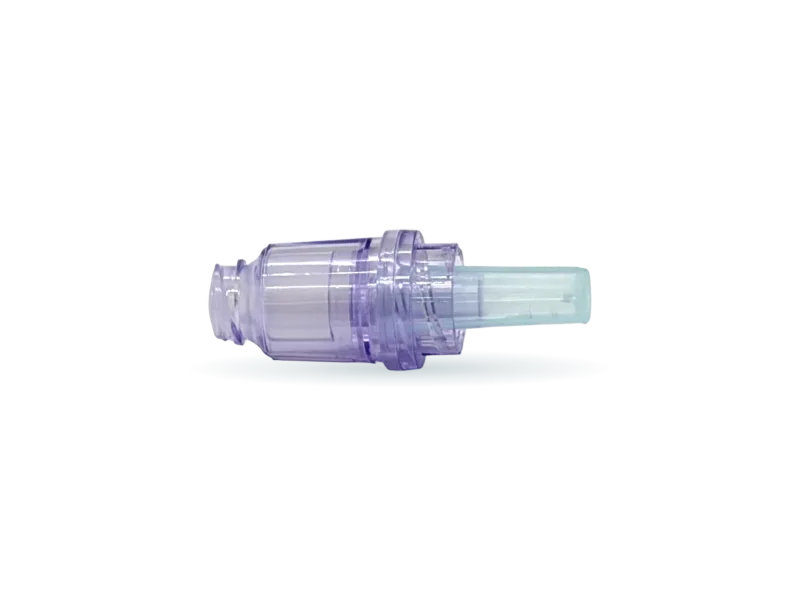
Negative displacement
Keeps the access closed and, on disconnection, may draw a small amount of blood into the catheter tip.
Frequently asked questions
What is a needleless valved connector?
A connector with a split-septum valve that allows intravenous administration of fluids and drugs and blood sampling without a needle, keeping the system closed between uses.
What is the difference between positive, neutral and negative displacement?
It is what happens to the fluid on disconnection. Positive pushes a small amount of fluid into the catheter. Neutral causes no significant fluid movement. Negative may draw a small amount of blood into the catheter tip.
Which catheters can it be used with?
Central venous catheter (CVC), PICC or peripheral venous catheter, with a Luer connection per ISO 80369-7.
How often should the connector be replaced?
Every 7 days or 200 connections, whichever comes first.
Can it be used for hemodialysis?
Use in hemodialysis and apheresis is not covered by the manufacturer's instructions.
Contact Norkor
Quotations, samples and documentation for institutions and distributors.
contato@norkor.com.br